 Skip to content
How to Read Every Section of a FESCO Electricity Bill
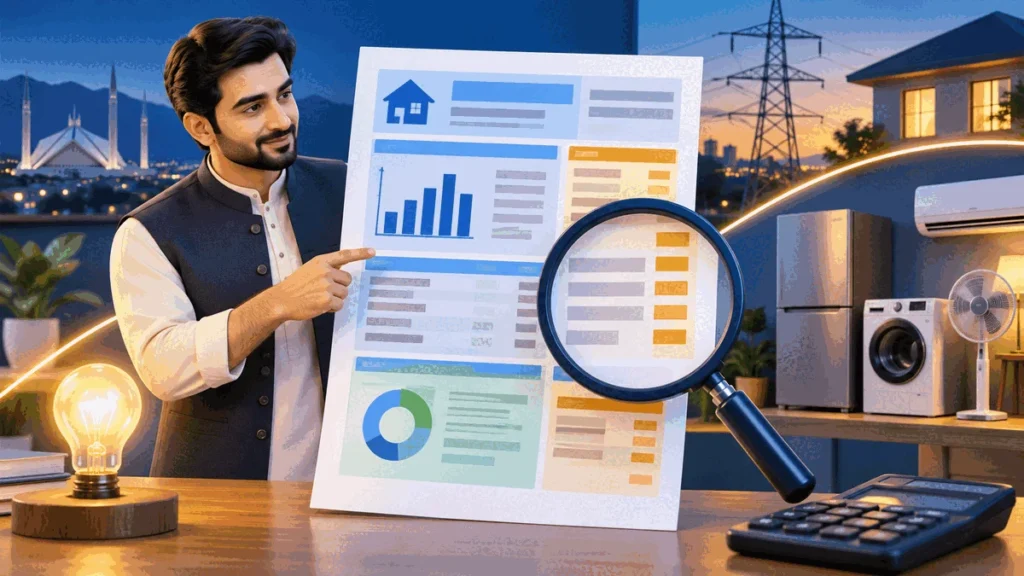
Read a FESCO bill in four passes: confirm the consumer and connection details, check the meter readings and units, review every charge and adjustment, then confirm the due date and payable totals. Comparing those fields with a previous bill helps separate higher consumption from tariff, tax, arrears or adjustment changes.
Read a FESCO bill in four passes: confirm the consumer and connection details, check the meter readings and units, review every charge and adjustment, then confirm the due date and payable totals. Comparing those fields with a previous bill helps separate higher consumption from tariff, tax, arrears or adjustment changes.
Independent information website; not an official FESCO, PITC, WAPDA or government service.
Consumer and connection details
Start with the consumer name, service address, Reference Number, Customer ID, tariff category, sanctioned load and the subdivision or office information. These fields identify the account and help you choose the correct biller or complaint office. If identity or address information is wrong, request correction through FESCO rather than editing a downloaded copy.
Billing period and meter readings
Find the billing month, reading date, previous reading and present reading. The difference generally explains the units recorded for a standard meter, subject to the meter type, multiplier and any official adjustment. Check whether the bill marks the reading as actual, estimated or otherwise qualified.
FESCO charges and adjustments
The bill can separate base energy charges from items such as fuel-price adjustments, quarterly adjustments, fixed charges or other utility components. Labels and applicability can change with current tariff notifications. Read the amount shown on the bill and use the applicable official tariff material for the period instead of an undated online rate table.
Government charges and carried balances
Taxes, duties or statutory fees may appear separately. Arrears can carry an earlier unpaid or adjusted balance into the current total. Do not assume every difference comes from units consumed; compare each line with the previous bill and note which items changed.
Due date and payable amounts
Bills commonly show an amount payable by the due date and a higher amount after it. Pay through a trusted channel and confirm the consumer details before authorizing the transaction. Keep the receipt because payment status may not update instantly in every interface.
Billing history and next steps
A history table can help compare earlier units and amounts, but the public portal may not offer a standalone copy for every month. If a reading, category or charge looks wrong, save the bill, meter photograph and payment evidence before submitting a complaint.
Practical checklist
- Use a recent bill and verify the consumer details before acting.
- Prefer the relevant official or primary source and note its date.
- Keep screenshots, meter photos, bills and payment receipts when a dispute is possible.
- Never share a password, PIN or one-time code for a bill lookup.
- Use the FESCO bill checker for the latest available bill and consult our fact-checking policy.
Frequently asked questions
Where is the FESCO Reference Number?
It is labeled on the bill near the consumer and connection details. Use the 14-digit number shown on the latest bill.
How are units linked to meter readings?
For a straightforward meter, present reading minus previous reading is the starting point, but meter type, multiplier and official adjustments can affect the billed units.
Why can the total rise when units are similar?
Tariff components, taxes, FPA, QTA, fixed charges, arrears or late charges may differ between billing periods.
What should I check before reporting an error?
Confirm the account, billing month, reading dates, meter readings, units, tariff category, charges, prior balance and payment record.
Sources and verification
This guide was checked against the following sources used for the claims above:
For related guidance, see About Us, the Editorial Policy and the Disclaimer.
Reviewed by FESCO Team. Scheduled for September 28, 2026.
{“@context”:”https://schema.org”,”@type”:”FAQPage”,”mainEntity”:[{“@type”:”Question”,”name”:”Where is the FESCO Reference Number?”,”acceptedAnswer”:{“@type”:”Answer”,”text”:”It is labeled on the bill near the consumer and connection details. Use the 14-digit number shown on the latest bill.”}},{“@type”:”Question”,”name”:”How are units linked to meter readings?”,”acceptedAnswer”:{“@type”:”Answer”,”text”:”For a straightforward meter, present reading minus previous reading is the starting point, but meter type, multiplier and official adjustments can affect the billed units.”}},{“@type”:”Question”,”name”:”Why can the total rise when units are similar?”,”acceptedAnswer”:{“@type”:”Answer”,”text”:”Tariff components, taxes, FPA, QTA, fixed charges, arrears or late charges may differ between billing periods.”}},{“@type”:”Question”,”name”:”What should I check before reporting an error?”,”acceptedAnswer”:{“@type”:”Answer”,”text”:”Confirm the account, billing month, reading dates, meter readings, units, tariff category, charges, prior balance and payment record.”}}]}Check your FESCO bill in seconds
Enter your 14-digit reference number and your current bill, due date and downloadable copy load right away.
Disclaimer: FESCOCheckBill.com.pk is an independent, informational guide and is not affiliated with, endorsed by, or operated by the Faisalabad Electric Supply Company (FESCO) or PITC. All bill data displayed comes directly from FESCO's official billing records. This site does not generate, alter, or process payments.


